A single wasp on a windowsill in July is nothing. A nest is something different — a colony of hundreds or thousands of wasps living and growing inside or alongside your property. Here's how to tell which you've got before you reach for the phone.
The seven telltale signs
- A steady flight path to a single point. The clearest sign by a long way. Stand outside, watch the roofline, and look for wasps arriving and leaving from one specific spot — usually no bigger than a 2p coin. Random wasps wander; a colony moves with purpose.
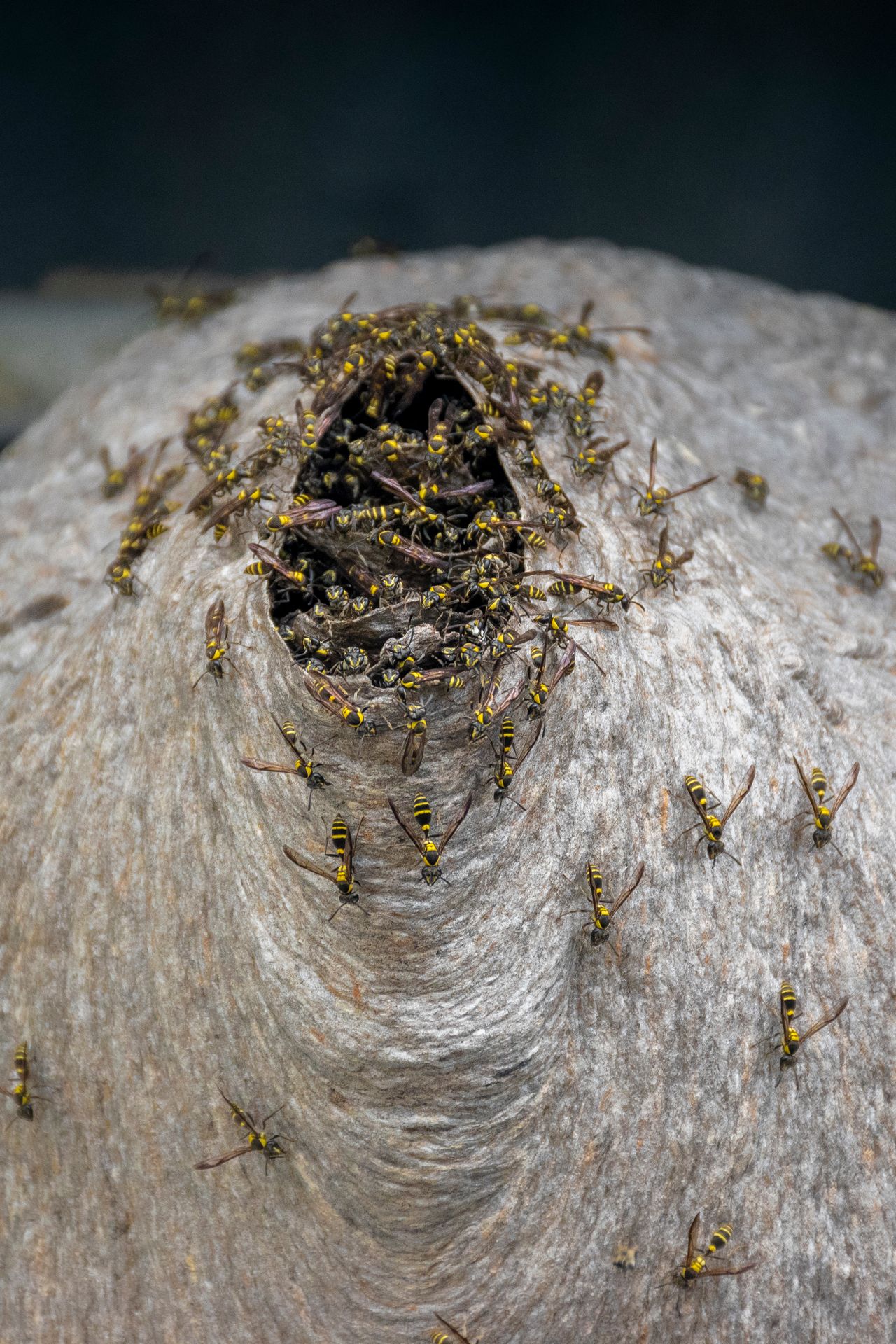
- Visible papery grey nest material. Wasps build from chewed wood pulp. If you can see a hollow grey structure with a texture like papier-mâché — under a soffit, hanging in a shed, or in the corner of a loft — that's the nest itself.
- Increasing wasp activity over weeks. A nest that had ten visible wasps a day in early July will have hundreds by late August. If the count is climbing rather than steady, you're watching a colony grow.
- Dead wasps on internal windowsills. When a nest is inside a wall cavity or loft, confused workers find their way into living space, can't navigate back out, and die against the windows. One or two means nothing; a daily handful is a strong signal.
- A faint scratching or rustling sound. Press your ear gently to the wall in a room near where you suspect activity. A live colony of several thousand wasps is audible — a soft, continuous rustling like distant rain on paper.
- Damp or stained patches on a ceiling. Larger interior nests can produce a damp brown patch on the ceiling below where they sit. This is rare but a near-certain indicator.
- Aggressive behaviour near a fixed area of the garden. A ground nest in a flower bed or under decking shows itself when mowing, gardening, or letting the dog out near the same spot consistently triggers wasps. Watch from a safe distance to find the ground entrance.
Where wasp nests are usually found
Across Stockport and Greater Manchester we see nests in the same handful of places year after year. In rough order of frequency:
- Roof voids and lofts — by far the single most common location, usually entering through a gap under a tile, a slipped slate, or a hole near the ridge.
- Soffits and bargeboards — the joint between the roof and the wall. Look for a steady flight at the corner of the eave.
- Sheds, garages, and outbuildings — the second most common, especially older wooden sheds with gaps in the cladding.
- Wall cavities — entry through an air brick, a drainage gap, or a hole around external pipework.
- Underground — in old rodent burrows, under decking, or in a flowerbed. Common wasp (Vespula vulgaris) nests are often ground-based.
- Bushes, hedges, and trees — less common in suburban gardens but possible.
- Chimneys and flues — particularly disused chimneys in older properties.
Sound like a wasp nest? It might be a bumblebee one
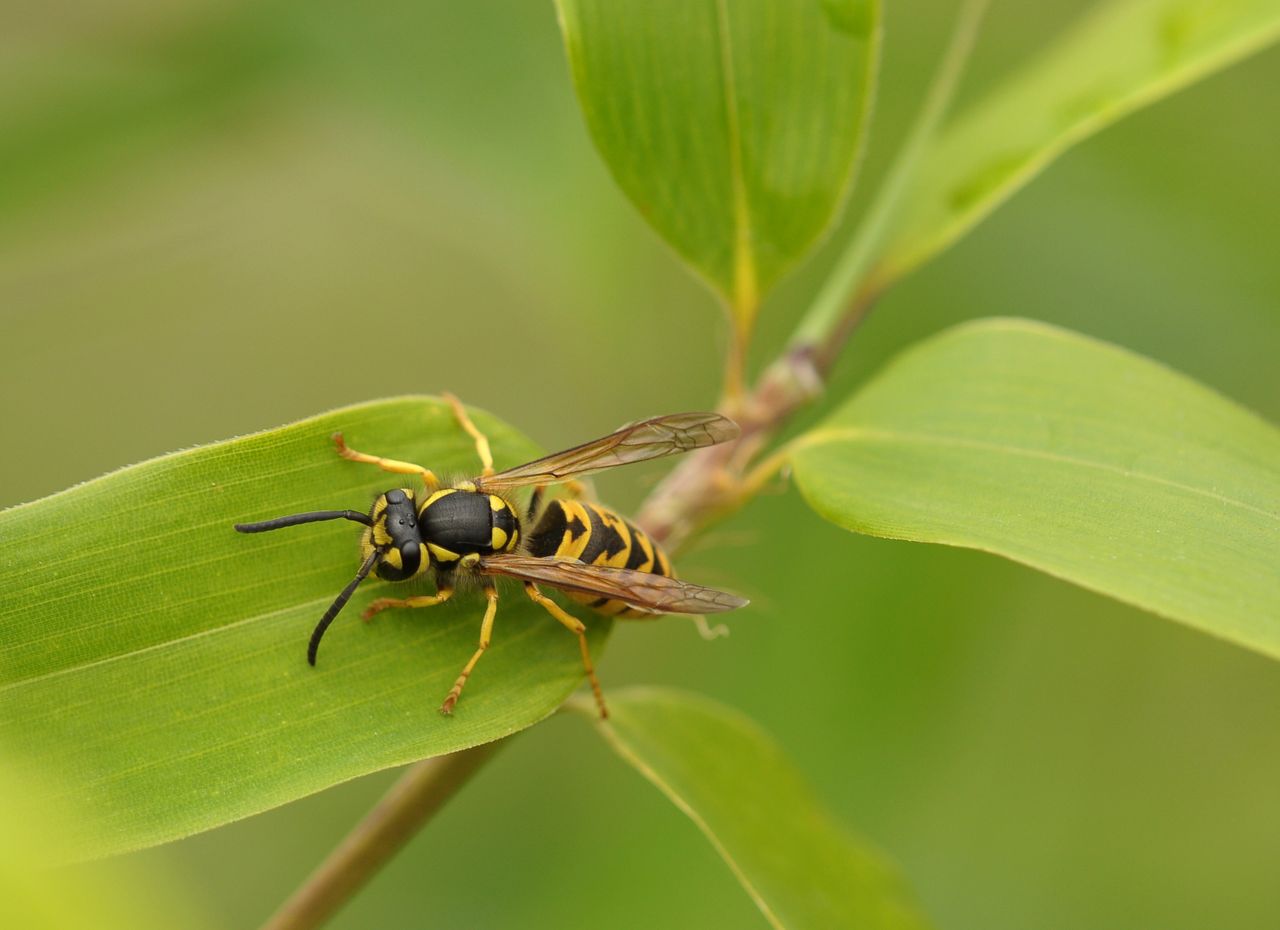
Before you book a treatment, double-check you actually have wasps. If the insects flying in and out are large, very furry, and a slow audible buzz — that's a bumblebee colony, and it almost certainly doesn't need treating. See our identification guide for a 30-second check, or our bumblebee page for when treatment genuinely makes sense.
What NOT to do
- Don't seal the entrance. Trapped wasps chew through plasterboard and emerge inside the house.
- Don't spray a shop-bought aerosol from below. It rarely reaches the colony, soaks workers in venom, and triggers a defensive swarm. People are seriously injured doing this every UK summer.
- Don't approach at night with a torch. Wasps are still defensive in low light, and white torch beams attract them straight to your face.
- Don't burn it out. Setting fire to a nest is the leading cause of pest-related house fires.
When to treat
A confirmed active wasp nest near a property should be treated. Unlike bumblebees, common and German wasps are aggressive in defence of their nest and will sting repeatedly. The risk increases through the summer as the colony grows, peaking in August. There is no benefit to waiting — the nest does not become less aggressive over time, only more so.
Confirmed a wasp nest?
£60 fixed fee, same-day across Stockport and Greater Manchester. You don't need to locate the entry point — pointing us at the activity is enough.
Call to BookFrequently Asked Questions
Stand outside in good light and watch the eaves, soffits, and roof line for two to three minutes. An active nest produces a steady stream of wasps flying in and out of one specific point — usually a gap under a roof tile, behind a fascia board, or at the corner of a soffit. The flight path is the giveaway: random wasps wander, but a colony at work flies in straight purposeful lines to a single entry.
A mature wasp nest is a hollow, papery grey structure made of chewed wood pulp, often resembling a deflated football or a layered, stripey cone. Cells are hexagonal. A starter nest in May or June is the size of a golf ball and usually hangs from a single stalk. By August the same nest can be the size of a basketball.
Very quickly. A nest started by a queen in late April reaches a few hundred workers by mid-July and 3,000–6,000 workers by mid-to-late August. The colony then collapses through September and October. This is why August is the peak month for treatment requests across Stockport — the nest is suddenly visible and aggressive.
No. A wasp nest is single-use. The colony dies in autumn and only newly mated queens overwinter, alone and elsewhere. However, the same property location can attract a new queen the following spring because the conditions that suited the first colony — a quiet cavity with a small entrance — still suit the next one.
No. Sealing wasps inside their nest is dangerous. Trapped wasps will chew through plasterboard, ceiling rose holes, or wall cavities to escape, often emerging inside the house. Always treat first, then seal the entrance once activity has stopped — usually 24–48 hours after professional treatment.
Not necessarily. A single wasp wandering through an open window in summer is normal. The signal that a nest is in or near the building is repeat sightings in the same room over consecutive days, dead wasps appearing on windowsills, or visible activity at one specific point on the exterior.