No — in most cases it is not too late, and here is the honest arithmetic. A wasp colony does die off on its own once the nights turn cold, and the nest is never reused. But from the height of summer that natural collapse is still six to ten weeks away, and the wasps are at their most difficult in the meantime. There is a point in autumn where treatment stops being worth the money, and this page says plainly when that is.
Seasonal note, late July 2026: nests are close to full size now and the workers are starting to turn to sugar, so this is the peak stretch of the wasp year. Same-day slots across Stockport go quickest at this time of year — a morning call gives the best chance of a same-day visit.
The honest short answer
If you have found an active nest in August or September and you are wondering whether to bother, the straight answer is that it is usually still worth treating. Not because the nest will last forever — it will not. It is because the weeks between now and the colony's natural end are the very weeks when a wasp nest is most active, most defensive, and most likely to be a problem around a door, a patio, or a bin.
Two things are true at once, and both deserve saying out loud. First, a wasp colony is an annual event: it builds through spring and summer, produces new queens in late summer, and then falls apart. Second, the nest is single-use. Once this year's colony dies, that papery grey structure is finished — no wasp moves back into it next year. The Wildlife Trusts describe the same lifecycle for the common wasp: only newly mated queens survive the winter, hibernating alone, and they start fresh nests in new places the following spring.
So if you have read that a nest will die off if left alone, you have read correctly. The question is not whether that is true. It is whether you can live alongside the nest for the six to ten weeks it takes.
Why a September nest is worse, not better
The common assumption is that a late-season nest is winding down and therefore calmer. The opposite is usually the case, and it is worth understanding why.
Through the summer the queen lays eggs constantly and the workers spend their days hunting insects to feed the grubs. In return, the larvae produce a sugary secretion the adult workers feed on. It is a tidy arrangement. In late summer the queen stops laying. The last larvae mature and leave, and suddenly there are no grubs to feed and no sugary secretion coming back the other way. Several thousand adult workers are left with nothing to do and a craving for carbohydrate they can no longer get at home.
That is the moment they turn up at your table. The wasps at the picnic, around the cider, on the fallen plums and in the bin are workers from a nest that has stopped growing and gone looking for sugar elsewhere. Both the Royal Horticultural Society and the British Pest Control Association describe this shift toward sweet food in late summer. The nuisance peaks, in other words, after the nest has finished expanding — which is exactly why "it has stopped getting bigger" is no comfort at all.
Yes, the nest will die on its own — the honest version
To be completely clear, because it is the part people most want confirmed: leave a wasp nest entirely alone and it will die. Workers and males die off through the autumn as the weather turns. Only the new, mated queens survive, and they do not stay in the nest — they disperse and hibernate on their own in log piles, sheds, loft spaces, and soil. Come spring, each surviving queen starts a brand-new nest somewhere else. The old nest stays empty for good.
So the "just wait it out" advice is not wrong. It is a genuine option, and for a nest high in a gable end that nobody goes near, it is often the sensible one. We would rather tell you that than take £60 off you for a nest you could have ignored.
So when is it still worth treating?
Treatment earns its keep when the nest and your daily life overlap. The situations where a late-season nest is still worth dealing with:
- A nest by a doorway, patio, or washing line. Several thousand foraging wasps crossing the space you actually use, for six to ten weeks, at the sugar-seeking stage. That is a long time to give up your own garden.
- A nest inside a loft, soffit, or wall cavity. Left to die naturally, the colony collapses inside the structure. The dead nest and grubs then become a food source for other insects, and a nest that failed at the entry point can send confused workers into the living space through gaps and downlights.
- Anyone at risk from stings. A household member who reacts badly, or a garden used by small children or pets. Wasps do not lose one sting and die as a honeybee does — a disturbed worker can sting repeatedly, which is why the British Pest Control Association recommends treatment where a nest is a genuine risk to health rather than a job to attempt yourself.
None of that changes the biology. It changes the maths on whether ten more weeks of an active nest is something you want to sit through.
Late-season treatment takes longer to clear
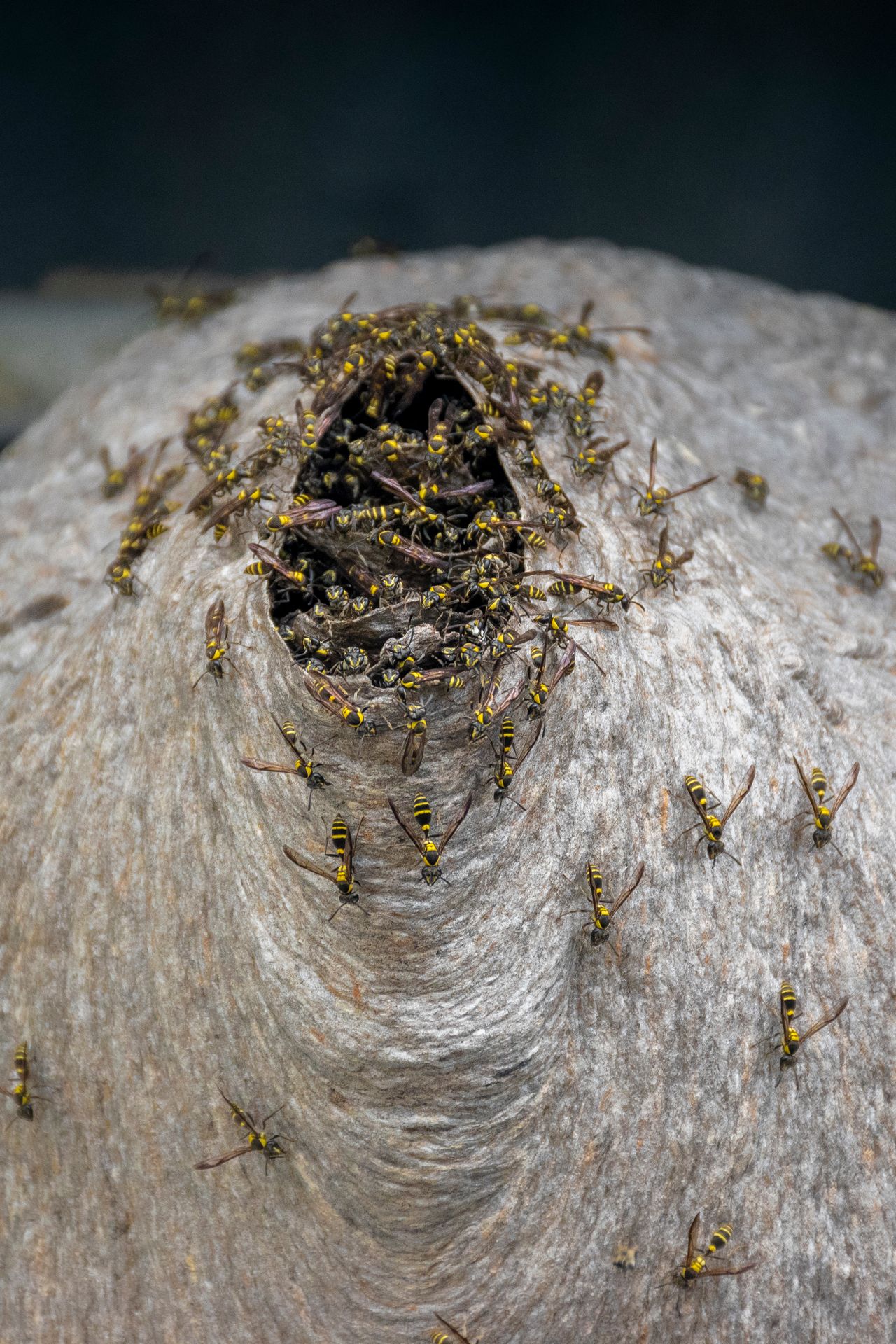
One honest caveat, because it affects what you should expect. Treatment works by contaminating the wasps at the nest entrance so they carry the insecticide inside as they come and go. In August, with a nest in full swing and constant traffic in and out, that happens fast — often within a few hours. Later in the season, when the colony is less active and fewer workers are moving through the entrance, the same treatment can take materially longer to clear, sometimes a day or two rather than an afternoon.
We would rather set that expectation than promise an August result in October. The nest still dies; it simply takes a little longer to go quiet. If anyone tells you a late-October nest will drop stone dead within the hour, be sceptical.
When it genuinely is too late (and we will tell you)
There is a point where paying for treatment stops making sense, and we will say so on the phone rather than take the booking.
By late October and into November, most colonies are already collapsing under their own weight. If a nest has gone quiet — no steady flight line at the entrance for several days, just the odd slow wasp at a window — it is finishing itself, and treatment is money spent on a job nature is already doing for free. In that case the honest advice is to wait it out and, once the weather has turned properly cold, deal with the empty nest yourself.
An old nest found in the loft over winter is the clearest example. A papery, hollow, silent nest is dead. It will not be reused, it holds no risk, and you can simply take it down and bin it. There is nothing to treat and nothing to pay for.
The one thing worth doing at that stage is looking at how the wasps got in — the gap under a tile, the hole in a soffit. The feature that suited this year's queen may well suit next year's. Sealing it once the nest is dead is worth more than any treatment.
Active nest you can still hear or see?
£60 fixed fee, same-day across Stockport and Greater Manchester. If it has already gone quiet, tell us — we will happily talk you out of a treatment you do not need.
Call to BookFrequently Asked Questions
No. A wasp nest in September is still fully active, still defended, and still capable of stinging repeatedly, even though the colony has stopped growing. It will die off naturally once the nights turn cold, but that is several weeks away. If the nest is anywhere you actually need to be, treating it is usually still worth doing.
Most colonies collapse through October and are gone by November. Worker and male wasps die as the weather turns cold, and only newly mated queens survive the winter, hibernating alone until spring. A wasp seen indoors in late autumn is usually either a dying worker or a queen looking for somewhere to overwinter.
Yes. Left completely alone, a wasp colony dies off on its own in autumn and the nest is never reused. For a nest in a spot nobody goes near, waiting it out is a perfectly sensible option. The catch is timing — from late summer the natural die-off is still six to ten weeks away, and the wasps are at their most active in the meantime.
No. A wasp nest is used for a single season and then abandoned for good. The colony dies in autumn and the surviving queens hibernate elsewhere, each starting a brand-new nest in a fresh place the following spring. An old nest can be taken down and binned once it is empty — it will not be reoccupied.
It is worth treating a September nest if it is causing a problem — near a door, a patio, a bin, or anywhere in daily use around your Stockport home. If the nest is high up and well away from where anyone goes, leaving it to die back naturally is a reasonable choice. There is no benefit to waiting for a nest that is already in your way, though; it will not calm down on its own.
It depends on the nest. Early in October, an obviously active nest with a steady stream of wasps at the entrance is still worth treating. By late October, many colonies are already collapsing on their own, and if the nest has gone quiet the honest answer is to save your money and let it finish naturally. We will tell you which one you have.
Yes, often. Treatment works by contaminating wasps as they pass the nest entrance, so it clears fastest when the colony is busy, as it is in August. Later in the season fewer workers are moving in and out, so the same treatment can take a day or two to go fully quiet rather than a few hours. The nest still dies — it just takes a little longer.