No. Blocking the entrance to a wasp nest does not kill the colony — it redirects it. The wasps are still alive inside the cavity, and once you close the door they know, several thousand of them start looking for another way out. Very often that way out is into the house. If you are stood on the ladder with the foam in your hand, this is the part worth reading first.
What actually happens when you block the hole
A wasp nest sits in a void — a loft, a wall cavity, the space behind a soffit, or under floorboards. The colony gets in and out through one small gap, often no bigger than a 2p coin. Seal that gap and the nest is trapped, but a trapped nest is not a dead one. Wasps chew for a living. It is how they build the nest in the first place, rasping wood pulp off fences and sheds. Faced with a blocked exit, they chew sideways through whatever is softest around them.
And on the inside of the cavity, the softest thing is almost never the brick you just sealed. It is the plasterboard of your ceiling, the loft insulation, the old lath-and-plaster of a period house, or the thin back of a boxed-in bulkhead. All of it is softer than the outside wall, and all of it faces into your rooms.
Where they come out on the inside
Once the wasps are chewing laterally, they follow the path of least resistance, and both modern and older houses offer plenty of it. The routes we see them use to reach living space:
- Downlighters. Recessed ceiling spotlights leave a ring-shaped hole straight through the plasterboard into the room below.
- Ceiling roses. The gap where a pendant light cable drops through the ceiling.
- Extractor fans. Bathroom and kitchen vents give a clear duct from the void into the room.
- The loft hatch. Rarely a tight seal — wasps walk straight round the edge and down into the landing.
- Coving and cornice gaps. The join between wall and ceiling is often open behind the decorative trim.
- Boxed-in soffits and bulkheads. The back of a plywood boxing over pipework is thin and quick to breach.
- Around pipework and light switches. Any penetration through the plasterboard is a potential exit.
How long this takes
This is not a slow process measured in weeks. A colony starts testing a blocked exit within minutes and is probing for alternatives within the hour. A determined nest can open a fresh route in a matter of hours, and will almost always have found one within a day or two. So the common hope — block it tonight, they give up and die quietly — does not happen. They do not give up. They redirect, and the redirect is often inward.
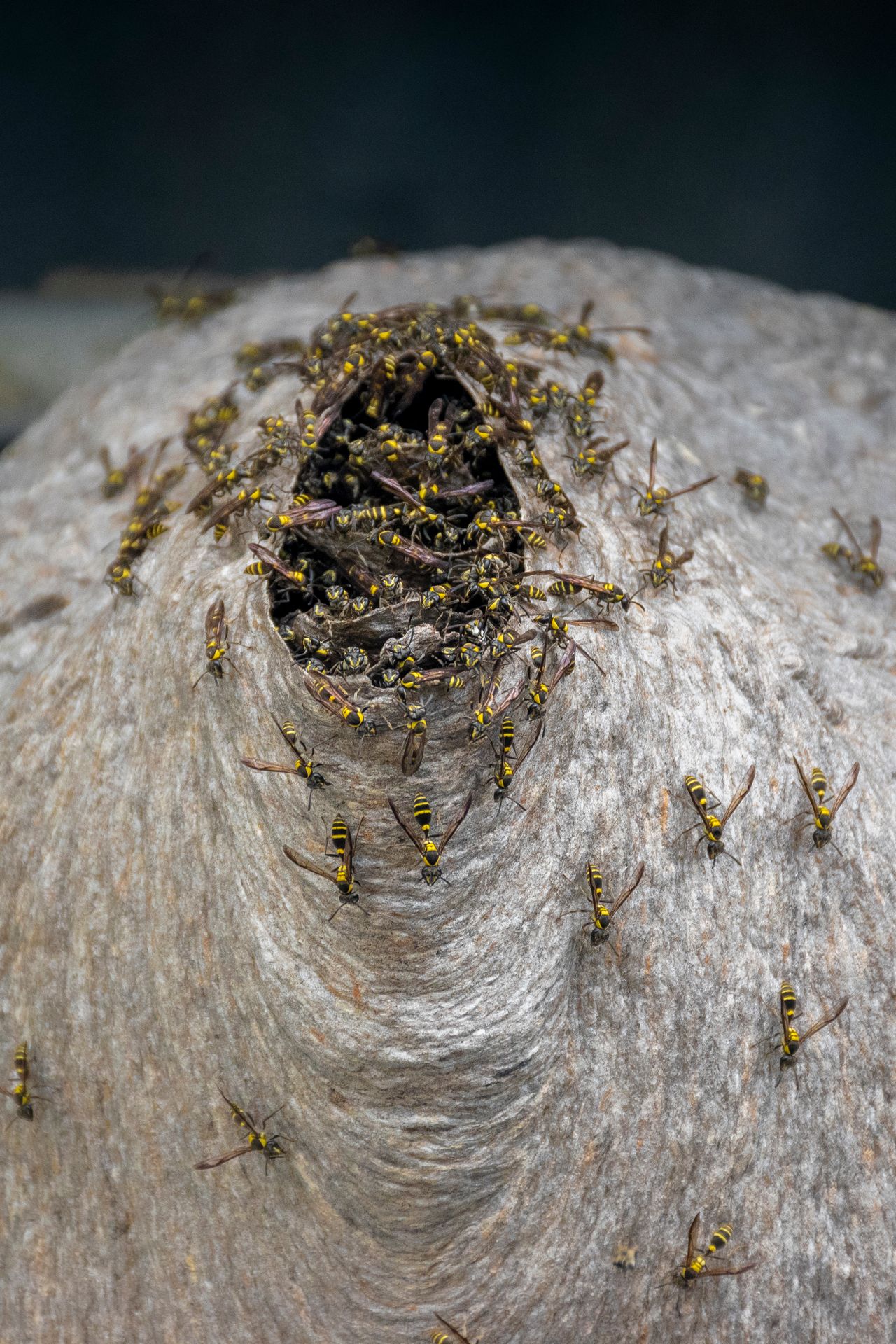
The things people reach for, and why each one fails
Every material has the same flaw. It closes one door on a colony that can chew a new one, and none of it touches the nest itself.
- Expanding foam. Wasps chew through cured foam without much effort — it is softer than the plasterboard they will already bite through. While it is still wet it simply diverts them.
- Silicone or mastic. Seals a thin bead across the gap but fills nothing behind it. The colony goes around it through the adjacent soft material.
- Wire wool. Sold as a rodent block, but the strands leave gaps a wasp walks through, and it does nothing to stop lateral chewing inside the void.
- A bin bag and tape. Chewed through in minutes. This is the least effective of the lot.
- Cement or ready-mixed filler. Sets hard over the entrance, which feels final, but the living colony is behind it in the cavity and works its way to the plasterboard instead.
The one time sealing is the right move
There is a single honest exception, and it comes at the end, not the beginning. Once a nest has been treated and every wasp is dead, sealing the entrance is sensible — it stops a new queen using the same gap next spring. The order is everything. Treat first, wait until the outside activity has completely stopped, then seal.
After a proper treatment you will usually see returning foragers drifting back to the entrance for a day or two. That is normal, and the insecticide deals with them. Wait until there is no flight at the hole at all — typically a clear 24 to 48 hours — before you close it. Seal a nest that still has live wasps in it and you are back to the problem this whole page is about.
What to do in the meantime
If there is an active nest and you have not had it treated yet, leave the entrance exactly as it is and manage the risk indoors instead:
- Keep that room shut. Close the door to any room next to the nest so a stray wasp cannot spread through the house.
- Close the windows on that elevation. Wasps returning to the nest cluster on that side of the building — open windows nearby invite them straight in.
- Tape round the loft hatch, on the inside. If wasps are already getting through onto the landing, masking tape around the hatch edge buys you time without sealing the nest itself.
- Leave the entry point alone. The one gap they are using is the gap you want them using. It is the door they know, and it keeps them out of the house.
If it has already been blocked
If you have already sealed it — or the previous owner did, or a well-meaning neighbour — the right fix depends on whether you can reach the spot safely from the ground. If you can, reopen the original entrance. Handing the colony back the door it knows is far better than leaving it to cut a new one through your ceiling.
If the nest is up a ladder, on the roof, or anywhere you would not stand comfortably, do not climb to it. Leave it blocked, keep the nearby room shut, and get it treated. A closed entrance the wasps are already working around is a reason to book sooner, not a reason to get on a ladder.
Sealed it in, or about to?
£60 fixed fee, same-day across Stockport and Greater Manchester. We treat the nest properly and seal the entrance afterwards, so it stays gone. Call 07770 015197.
Call to BookFrequently Asked Questions
No. Blocking the entrance does not kill the nest, it redirects it. The colony is still alive inside the cavity, and once you close the gap they know, several thousand wasps start chewing for another way out. Very often that way out is into the house. Treat the nest first, then seal the hole afterwards.
The trapped wasps chew sideways through the softest material around them, and inside a wall or loft that material is your plasterboard, insulation, or old lath, not the brick outside. They follow the path of least resistance and end up in living space, usually within a day or two. Blocking the hole does nothing to the nest itself.
No. Wasps chew through cured expanding foam without much effort, because it is softer than the plasterboard they are already willing to bite through. While the foam is still wet it simply diverts them. It seals one door on a live colony that can open a new one, so it makes the problem worse rather than better.
Often, yes. When you shut the entrance the wasps know, the colony chews inward through the ceiling or wall cavity and emerges through downlighters, extractor vents, the loft hatch, or gaps in the coving. Leaving the original entry point open keeps them using the door they know, which keeps them out of the house.
Usually hours to a couple of days, not weeks. A colony starts testing a blocked exit within minutes and probes for alternatives within the hour. A determined nest can open a new route the same day and will almost always have found one within 48 hours. They do not give up and die quietly.
Yes, once every wasp is dead. Treat the nest first, wait until there is no flight activity at the entrance at all — typically a clear 24 to 48 hours — then seal it to stop a new queen using the same gap next spring. Some returning foragers drift back for a day or two after treatment, which is normal, so wait until the hole is genuinely quiet.
If you can reach the spot safely from the ground, reopen the original entrance so the colony uses the door it knows rather than cutting a new one through your ceiling. If the nest is up a ladder or on the roof, do not climb to it. Leave it blocked, keep the nearby room shut, and get it treated.